
← सभी लेख
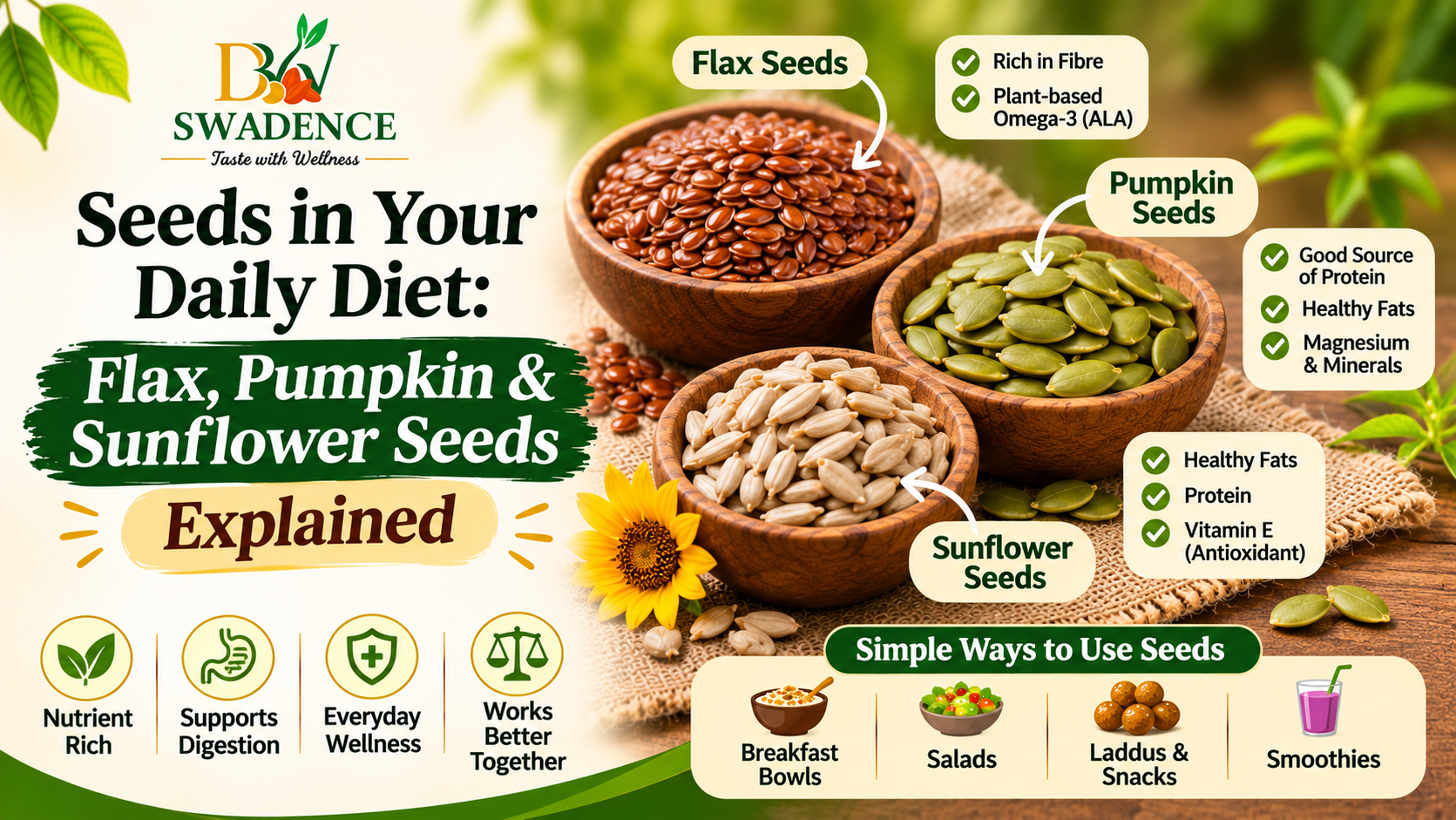
Seeds in Your Daily Diet: Flax, Pumpkin and Sunflower Seeds Explained
Seeds in Your Daily Diet: Flax, Pumpkin and Sunflower Seeds Explained
Sometimes, the smallest ingredients can bring remarkable variety to our everyday meals.
Seeds have been part of traditional food preparations across different cultures for generations. Today, they are gaining attention because of their nutritional composition and versatility.
Flax seeds, pumpkin seeds and sunflower seeds are particularly popular choices. Each offers a different combination of nutrients, flavours and textures.
But what makes these seeds different? How can you include them in your daily diet?
Let's explore their nutritional properties and practical uses.
1. Why Are Seeds Important in Everyday Nutrition?
Seeds are naturally rich in several nutrients that contribute to a balanced diet.
Depending on the variety, seeds can provide:
- Dietary fibre.
- Plant-based protein.
- Unsaturated fats.
- Essential fatty acids.
- Vitamins and minerals.
- Naturally occurring plant compounds.
One advantage of including different seeds in your diet is nutritional variety.
Instead of depending on a single ingredient, combining different varieties can introduce a broader range of nutrients into everyday meals.
However, seeds are also energy-dense foods, so appropriate portions matter.
2. Flax Seeds: A Plant-Based Source of Omega-3
Flax seeds, also known as linseeds, are small brown or golden seeds known for their nutritional composition.
They are particularly recognised for containing alpha-linolenic acid (ALA), an essential plant-based omega-3 fatty acid.
Flax seeds also provide dietary fibre and naturally occurring plant compounds called lignans.
Nutritional Highlights of Flax Seeds
Plant-Based Omega-3: Flax seeds are a notable source of ALA, which contributes to the body's essential fatty acid requirements.
Dietary Fibre: They contain both soluble and insoluble fibre, which contribute to digestive health.
Lignans: Flax seeds contain plant compounds known as lignans.
Protein: They also contribute plant-based protein to the diet.
How to Include Flax Seeds
You can incorporate flax seeds into everyday meals in several ways:
- Add ground flax seeds to breakfast bowls.
- Mix them into homemade laddus.
- Include them in smoothies.
- Sprinkle them over salads.
- Add them to homemade snack preparations.
Ground flax seeds are generally easier to digest and allow better access to their nutrients than whole seeds.
3. Pumpkin Seeds: Small Seeds With Valuable Minerals
Pumpkin seeds, commonly called pepitas when hulled, are popular for their pleasant flavour and nutritional value.
They are a source of plant-based protein, unsaturated fats and several minerals.
One particularly notable mineral found in pumpkin seeds is magnesium.
Nutritional Highlights of Pumpkin Seeds
Protein: Pumpkin seeds provide plant-based protein that contributes to everyday nutritional requirements.
Magnesium: Magnesium supports normal muscle and nerve function and several other processes in the body.
Healthy Fats: They contain unsaturated fats that contribute to their nutritional profile.
Zinc: Pumpkin seeds also provide zinc, an essential mineral involved in normal immune function.
How to Include Pumpkin Seeds
Pumpkin seeds are versatile and can be enjoyed in different preparations:
- Add them to breakfast cereals.
- Sprinkle them over salads.
- Combine them with roasted nuts.
- Use them in homemade dry fruit mixtures.
- Include them in traditional laddu recipes.
Light roasting can enhance their flavour and make them enjoyable as a snack.
4. Sunflower Seeds: A Source of Vitamin E
Sunflower seeds come from the sunflower plant and are widely used in snacks, bakery products and traditional food preparations.
They are particularly known for their vitamin E content.
Vitamin E is a fat-soluble antioxidant that helps protect cells from oxidative damage.
Sunflower seeds also contain protein, dietary fibre and unsaturated fats.
Nutritional Highlights of Sunflower Seeds
Vitamin E: Sunflower seeds are a notable dietary source of vitamin E.
Healthy Fats: They contain predominantly unsaturated fats.
Plant-Based Protein: They contribute protein to everyday meals.
Minerals: They provide minerals such as magnesium and selenium.
How to Include Sunflower Seeds
You can enjoy sunflower seeds in different ways:
- Add them to breakfast bowls.
- Mix them into homemade granola.
- Sprinkle them over salads.
- Combine them with other seeds.
- Use them in homemade laddus and snack mixtures.
Their mild, nutty flavour makes them easy to combine with other ingredients.
5. Flax vs Pumpkin vs Sunflower Seeds: What Makes Them Different?
Although all three seeds offer nutritional value, their compositions are different.
Flax Seeds
- Particularly rich in plant-based omega-3 ALA.
- Provide dietary fibre.
- Contain lignans.
- Available in brown and golden varieties.
Pumpkin Seeds
- Provide plant-based protein.
- Contain magnesium and zinc.
- Provide unsaturated fats.
- Have a mild, nutty flavour.
Sunflower Seeds
- Particularly known for vitamin E.
- Provide plant-based protein.
- Contain unsaturated fats.
- Offer a mild and slightly sweet flavour.
Rather than choosing only one variety, including different seeds can help introduce nutritional diversity into your diet.
6. Why Combining Different Seeds Can Be a Good Idea
Every seed has its own nutritional characteristics.
Flax seeds contribute ALA and fibre, pumpkin seeds provide minerals and protein, while sunflower seeds are particularly known for vitamin E.
Combining them allows you to enjoy different flavours and nutritional components in one preparation.
Some popular combinations include:
- Flax, pumpkin and sunflower seeds.
- Almonds and mixed seeds.
- Dates and seeds.
- Roasted grains and seeds.
- Nuts, raisins and seeds.
These combinations can be used in breakfast bowls, homemade snacks and traditional Indian recipes.
The key is maintaining appropriate proportions rather than assuming that more ingredients automatically mean better nutrition.
7. How Much Seeds Should You Eat Daily?
There is no single ideal seed quantity for everyone.
The appropriate amount depends on individual dietary requirements, energy needs and overall food intake.
Seeds are nutrient-dense but also contain considerable calories in relatively small portions.
A few practical considerations include:
- Introduce fibre-rich seeds gradually.
- Drink adequate water when increasing dietary fibre.
- Choose plain, unsalted varieties when appropriate.
- Be mindful of total serving size.
- Consider individual allergies and dietary restrictions.
People with specific medical or dietary conditions should seek personalised advice from a qualified healthcare professional.
8. Easy Ways to Add Seeds to Your Everyday Meals
You do not need complicated recipes to include seeds in your diet.
Here are some simple ideas:
Breakfast Bowls: Add a small quantity of mixed seeds to oats, yoghurt or porridge.
Salads: Sprinkle pumpkin and sunflower seeds over fresh vegetables.
Smoothies: Ground flax seeds can be mixed into fruit smoothies.
Homemade Laddus: Combine seeds with nuts, dates and other traditional ingredients.
Roasted Snacks: Prepare a simple mixture of different seeds for occasional snacking.
Homemade Granola: Combine seeds with oats and other ingredients for a versatile breakfast preparation.
Small additions can make everyday meals more varied and interesting.
9. Common Mistakes to Avoid When Eating Seeds
Although seeds are nutritious, a few common mistakes are worth avoiding.
Eating Excessive Quantities: Seeds contain concentrated energy, so portion awareness is important.
Ignoring Allergies: Some individuals may have allergies or sensitivities to particular seeds.
Assuming All Seeds Have the Same Nutrients: Different seeds offer different nutritional profiles.
Relying Only on Seeds for Nutrition: No single food can provide everything the body needs.
Ignoring Storage: Seeds contain fats that can deteriorate when exposed to excessive heat, light and air. Store them in airtight containers according to product instructions.
Understanding these basics can help you make more informed food choices.
10. The Swadence Approach: Small Ingredients, Thoughtful Combinations
At DB6V Swadence, we appreciate the nutritional variety offered by traditional ingredients such as nuts and seeds.
Flax seeds, pumpkin seeds and sunflower seeds each contribute different characteristics to a food preparation.
Our philosophy focuses on combining familiar ingredients thoughtfully while keeping convenience and portion awareness in mind.
The Swadence approach includes:
- Thoughtfully selected ingredients.
- Traditional Indian food inspiration.
- Carefully considered combinations.
- Convenient individual portions.
- Clear ingredient information.
We believe that everyday food choices should be simple, enjoyable and understandable.
Seeds are not miracle ingredients. Their value comes from being part of a varied and balanced eating pattern.
Frequently Asked Questions
Q1. Which seeds are best for everyday nutrition?
Flax, pumpkin and sunflower seeds all provide different nutrients. Including a variety can help improve dietary diversity.
Q2. Are flax seeds a good source of omega-3?
Yes. Flax seeds are a notable plant-based source of alpha-linolenic acid (ALA), an essential omega-3 fatty acid.
Q3. What nutrients do pumpkin seeds provide?
Pumpkin seeds provide plant-based protein, unsaturated fats, magnesium and zinc.
Q4. Why are sunflower seeds popular?
Sunflower seeds are particularly known for vitamin E and also provide protein and unsaturated fats.
Q5. Can different seeds be eaten together?
Yes. Flax, pumpkin and sunflower seeds can be combined in breakfast bowls, salads and homemade snacks.
Q6. Should flax seeds be eaten whole or ground?
Ground flax seeds are generally easier to digest and allow better access to their nutrients compared with whole seeds.
Q7. Can seeds be included in homemade laddus?
Yes. Different seeds can be combined with nuts, dates and other ingredients to prepare traditional homemade laddus.
Q8. Are seeds suitable for everyone?
Most people can include seeds in their diets, but individuals with allergies or specific dietary restrictions should check their suitability.
Final Thoughts
Flax, pumpkin and sunflower seeds may be small, but each offers a different nutritional contribution.
Flax seeds are known for plant-based omega-3, pumpkin seeds provide minerals and protein, while sunflower seeds are particularly valued for vitamin E.
Including different seeds in appropriate portions can be a simple way to introduce more variety into everyday meals.
At DB6V Swadence, we believe thoughtful food choices begin with understanding the ingredients we eat.
Because sometimes, small ingredients can become part of meaningful everyday habits.
DB6V Swadence – Taste With Wellness.