← All articles
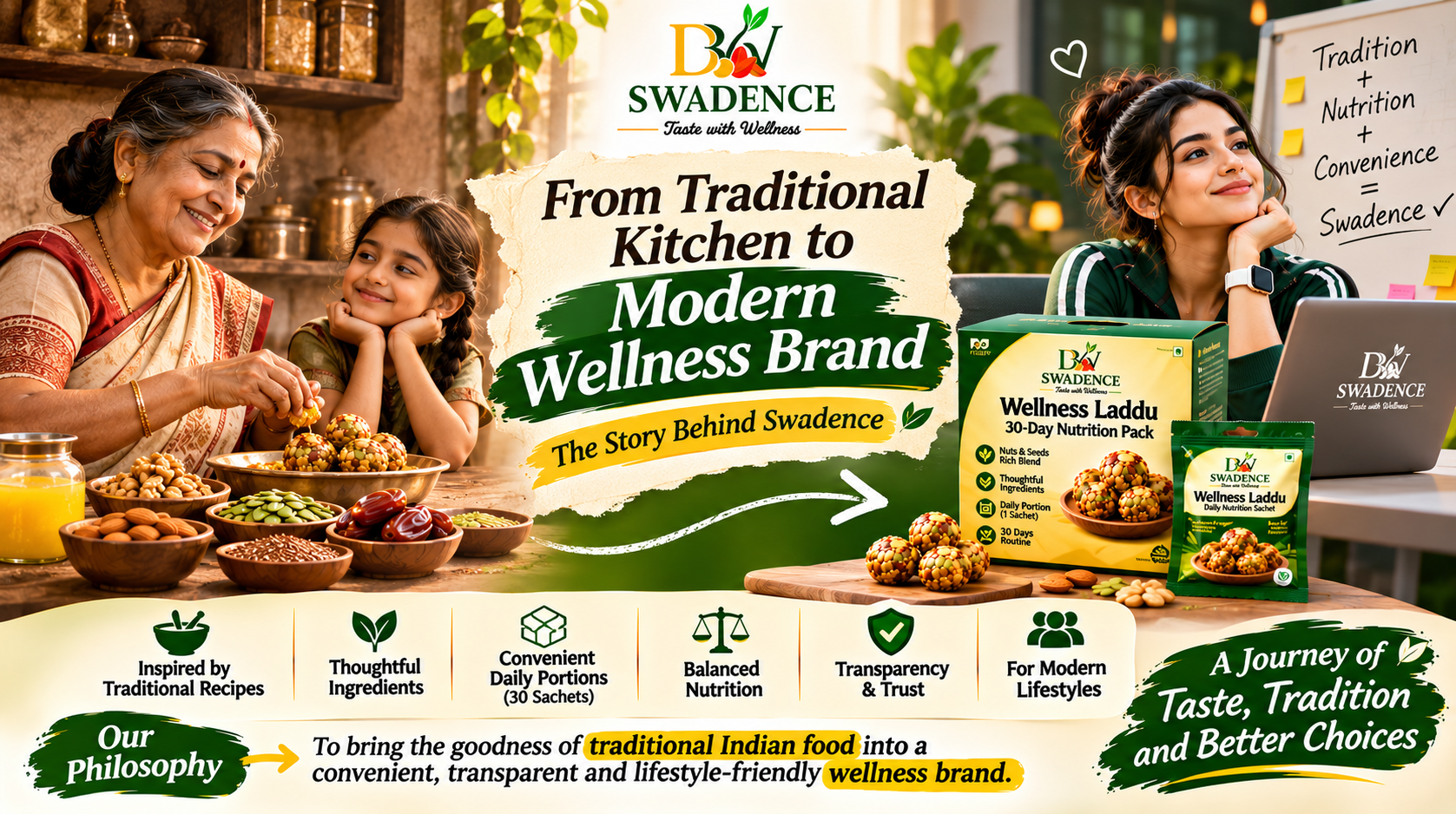
From Traditional Kitchen to Modern Wellness Brand: The Story Behind DB6V Swadence
From Traditional Kitchen to Modern Wellness Brand: The Story Behind DB6V Swadence
Every familiar taste has a story.
For many Indian families, some of the most memorable food experiences begin in the kitchen. The aroma of freshly roasted ingredients, homemade laddus prepared during festivals, dry fruits stored for everyday use and traditional recipes passed from one generation to another are all part of India's rich food culture.
These traditions are more than just recipes. They represent familiarity, thoughtful preparation and a connection with food.
But lifestyles have changed.
Today, people have increasingly busy schedules. Work, travel, family responsibilities and changing food habits have created a demand for convenient food options that fit into everyday routines.
This raises an interesting question:
Can traditional Indian food inspiration be presented in a format that suits modern lifestyles?
That thought is at the heart of DB6V Swadence.
1. The Inspiration: India's Traditional Kitchen
Indian kitchens have always been places of creativity.
For generations, families have prepared homemade foods using ingredients such as:
- Almonds and walnuts.
- Pumpkin and sunflower seeds.
- Flax seeds.
- Grains and pulses.
- Ghee.
- Dates and other natural sweetening ingredients.
- Traditional herbs and spices.
These ingredients have appeared in different regional recipes, including laddus, panjiri, roasted mixes and other homemade preparations.
Traditional cooking often involved selecting ingredients, roasting them carefully, combining different textures and adjusting recipes according to family preferences.
The result was food that carried familiarity and cultural meaning.
At Swadence, this traditional food culture provides an important source of inspiration.
2. Why Traditional Food Needs a Modern Format
Traditional recipes remain popular, but the way people consume food has evolved.
Consider the everyday routine of a working professional.
Mornings can be busy, office schedules can be unpredictable and preparing homemade snacks every day may not always be practical.
Students, entrepreneurs, travellers and homemakers face their own challenges.
Many people appreciate traditional food but also look for:
- Convenient packaging.
- Easy-to-carry snacks.
- Clearly defined portions.
- Understandable ingredient information.
- Products that fit into busy routines.
The challenge is not to replace traditional food.
It is to make familiar food ideas more convenient for contemporary lifestyles.
This is the approach that inspired the Swadence concept.
3. The Idea Behind DB6V Swadence
DB6V Swadence was developed around a simple philosophy:
Traditional Indian food inspiration, thoughtfully presented for modern everyday routines.
Instead of treating a wellness-inspired snack as just another packaged sweet, the idea focuses on the complete experience.
That includes:
- Ingredient selection.
- Recipe formulation.
- Preparation methods.
- Portion planning.
- Convenient packaging.
- Clear product information.
Every element contributes to how a food product is experienced by the consumer.
Swadence aims to bring these considerations together in a familiar Indian food format.
4. Why Ingredients Matter
The quality and character of a food product depend greatly on its ingredients.
Different ingredients contribute different nutritional characteristics, flavours and textures.
At Swadence, ingredient combinations draw inspiration from traditional Indian food preparations.
Almonds
Almonds contribute protein, dietary fibre, unsaturated fats and several micronutrients.
They also add a familiar nutty flavour and texture.
Walnuts
Walnuts provide unsaturated fats and are particularly known for their plant-based omega-3 fatty acid, ALA.
Pumpkin Seeds
Pumpkin seeds contribute protein, fats and minerals such as magnesium.
Sunflower Seeds
Sunflower seeds provide vitamin E, protein and unsaturated fats.
Flax Seeds
Flax seeds contain dietary fibre and alpha-linolenic acid, a plant-based omega-3 fatty acid.
Dates
Dates can contribute natural sweetness, carbohydrates and dietary fibre.
The nutritional composition of any finished product depends on the quantity and combination of ingredients used.
Our philosophy is to think about the role of each ingredient rather than selecting ingredients simply because they are popular.
5. The Importance of Thoughtful Preparation
A good recipe is not only about what goes into it.
How ingredients are handled and prepared also matters.
Traditional Indian recipes often involve preparation steps such as:
- Cleaning and sorting ingredients.
- Roasting selected grains and nuts.
- Preparing ingredient combinations.
- Mixing ingredients in appropriate proportions.
- Maintaining consistency during preparation.
- Packing the finished product appropriately.
For roasted flour-based preparations, controlled roasting can help develop aroma, flavour and texture.
Preparation requires attention because excessive heat or insufficient roasting can affect the final result.
At Swadence, the preparation philosophy takes inspiration from traditional cooking practices while considering consistency and convenience.
6. Why Portion Control Is Part of Our Philosophy
One of the important ideas behind Swadence is portion awareness.
Many traditional homemade snacks are stored in large containers.
While this is convenient for families, it can sometimes make it difficult to estimate how much is being consumed.
Portion planning offers a more organized alternative.
It encourages people to become aware of serving quantities instead of eating directly from a large container.
This is particularly relevant for foods containing nuts, seeds and ghee, which can be energy-dense.
The goal is not to suggest that one serving is perfect for everyone.
Individual nutritional requirements differ.
The purpose is to make food consumption easier to organize.
7. Understanding the 30-Sachet Concept
One of the distinctive ideas behind DB6V Swadence is its 30-sachet packaging format.
The concept is simple:
One sachet for one day. Thirty sachets for thirty days.
Rather than measuring a snack every day, customers receive individual portions organized around a convenient monthly format.
This approach offers several practical advantages.
Daily Convenience
Individual servings make daily snack planning easier.
Easy Storage
Separate sachets can be organized more conveniently.
Portability
Individual packs are easier to carry to work, college or while travelling.
Portion Awareness
Predefined servings help consumers understand the quantity they are consuming.
Routine Management
Having a planned serving available can make consistent snack routines easier to maintain.
The 30-sachet concept is about convenience and organization, not a promise of guaranteed nutritional or medical results.
8. Traditional Taste Meets Modern Convenience
For many people, healthy eating is associated with complicated diets, unfamiliar ingredients and major lifestyle changes.
But food does not always need to be complicated.
Familiar Indian ingredients can be used in thoughtful combinations while retaining the taste and character people recognize.
Traditional food inspiration can coexist with modern packaging and convenient serving formats.
That is the balance Swadence aims to create.
We believe people should not have to abandon familiar food traditions simply because their daily schedules have changed.
Instead, familiar food ideas can evolve with changing lifestyles.
9. Why Transparency Matters in Modern Food Brands
Today's consumers are increasingly interested in understanding what they eat.
They want to know:
- Which ingredients are used?
- What sweeteners are included?
- What is the nutritional composition?
- How much does one serving contain?
- Are there any allergens?
- How should the product be stored?
- What is the shelf life?
These are reasonable questions.
A food brand should make important product information accessible and understandable.
At DB6V Swadence, we believe transparency should be an essential part of the customer experience.
Ingredient lists, nutritional information, serving sizes and storage instructions help customers make informed decisions.
We also believe wellness communication should remain responsible.
No single food product can replace a balanced diet or guarantee specific health outcomes.
10. A Modern Approach Without Forgetting Tradition
Modern food innovation does not always mean creating something completely unfamiliar.
Sometimes, it means rethinking something people already know and love.
Traditional laddus are a good example.
They have been prepared in countless Indian homes using different ingredients and regional methods.
Modern wellness-inspired formulations can take inspiration from these familiar preparations while considering ingredient combinations, sweetness, serving sizes and packaging.
This does not mean every traditional recipe needs to change.
It simply creates another option for people who appreciate traditional food inspiration in a convenient format.
Swadence follows this idea of evolution rather than replacement.
11. Who Is Swadence Designed For?
Swadence is intended for people who appreciate traditional Indian food-inspired products and convenient packaging.
This can include:
Working Professionals
People looking for conveniently packed snack options during busy workdays.
Students
Individuals who prefer easy-to-carry food options during college or study schedules.
Busy Families
Households interested in convenient individual snack portions.
Frequent Travellers
People who appreciate organized and portable snack packaging.
Traditional Food Enthusiasts
Consumers who enjoy familiar Indian food flavours and ingredient combinations.
As with any packaged food, consumers should review ingredients, nutritional information and allergens to determine whether a product suits their individual needs.
12. Our Philosophy: Taste, Tradition and Thoughtful Choices
The Swadence philosophy is built around a few important principles.
Tradition: Taking inspiration from India's diverse homemade food culture.
Ingredients: Giving thoughtful consideration to ingredient selection and formulation.
Preparation: Respecting the importance of preparation, flavour and texture.
Convenience: Presenting familiar food ideas in an easy-to-use format.
Portion Awareness: Making individual servings easier to organize.
Transparency: Helping customers understand what they are purchasing.
These principles guide the way we think about our products and the experience we want to create.
13. Looking Ahead: The Future of Traditional Wellness Foods
Food preferences continue to evolve.
Consumers are becoming more interested in ingredient transparency, convenient packaging and products that fit into their daily routines.
At the same time, traditional Indian food culture remains an important part of everyday life.
We see an opportunity to bring these two worlds closer.
The future of food does not have to be a choice between tradition and modern convenience.
There is room for both.
Our vision is to continue exploring traditional Indian food inspiration through thoughtfully developed products and convenient formats.
We want to make familiar food ideas easier to enjoy and easier to understand.
Frequently Asked Questions
Q1. What is DB6V Swadence?
DB6V Swadence is a wellness-focused food brand inspired by traditional Indian food preparations, thoughtful ingredient combinations and convenient everyday packaging.
Q2. What is the philosophy behind Swadence?
Swadence focuses on bringing traditional Indian food inspiration into modern lifestyles through thoughtful ingredients, preparation, portion awareness and convenience.
Q3. Why does Swadence use traditional Indian ingredients?
Ingredients such as almonds, walnuts, seeds, grains and dates have long been used in different Indian food preparations. They offer different flavours, textures and nutritional characteristics.
Q4. What is the 30-sachet concept?
It is an individual portion packaging format designed around one sachet per day for thirty days.
Q5. Why is portion awareness important?
Portion awareness helps consumers understand how much they consume, particularly when eating energy-dense foods such as nuts and seeds.
Q6. Does Swadence aim to replace traditional homemade food?
No. The idea is to take inspiration from traditional food culture and present it in a convenient modern format.
Q7. Does Swadence promise specific health results?
No. Swadence focuses on food, ingredients and convenience rather than promising guaranteed medical or health outcomes.
Q8. How does Swadence approach ingredient transparency?
The brand philosophy emphasizes making ingredient lists, nutritional information, serving sizes and other relevant product details understandable to consumers.
Q9. Who can enjoy Swadence products?
People interested in traditional Indian food-inspired snacks and convenient individual portions may find the products relevant to their preferences. Product ingredients and allergens should always be checked before consumption.
Q10. What does the Swadence tagline mean?
Taste With Wellness represents the brand's approach of bringing familiar food enjoyment together with thoughtful ingredient choices and everyday convenience.
Final Thoughts: A Tradition That Moves Forward
Some of the best food memories come from traditional kitchens.
The aroma of roasted ingredients, the taste of homemade laddus and the familiar combinations of nuts, seeds and grains are part of a food culture that continues to inspire generations.
But today's lifestyle is different.
People want convenience without losing familiarity. They want to understand ingredients and make conscious food choices without making everyday eating unnecessarily complicated.
DB6V Swadence brings these ideas together.
Inspired by traditional Indian food preparations and designed around modern convenience, Swadence aims to make familiar food ideas more accessible through thoughtful formulations and individual portions.
We are not trying to replace tradition.
We are building on it.
Because the future of food can still carry the taste of the past.
DB6V Swadence — Taste With Wellness.