
← सभी लेख
Why Dry Fruits and Seeds Are Better as Part of a Balanced Diet
Why Dry Fruits and Seeds Are Better as Part of a Balanced Diet
Dry fruits and seeds have been an important part of Indian food traditions for generations.
From almonds and walnuts to pumpkin seeds, sunflower seeds and flax seeds, these small ingredients offer a variety of nutrients that can contribute to a balanced diet.
Today, they are often described as superfoods because of their nutritional properties. However, their real value is better understood when we look at the different nutrients they provide and how they fit into everyday eating habits.
No single dry fruit or seed can provide everything the body needs. The advantage comes from nutritional variety, appropriate portions and consistent food choices.
Let's explore why these ingredients deserve a place in a balanced diet.
1. Why Dry Fruits and Seeds Are Nutritionally Important
Dry fruits and seeds provide a combination of nutrients that support different functions in the body.
Depending on the variety, they may contain:
- Protein.
- Dietary fibre.
- Unsaturated fats.
- Vitamins.
- Essential minerals.
- Naturally occurring plant compounds.
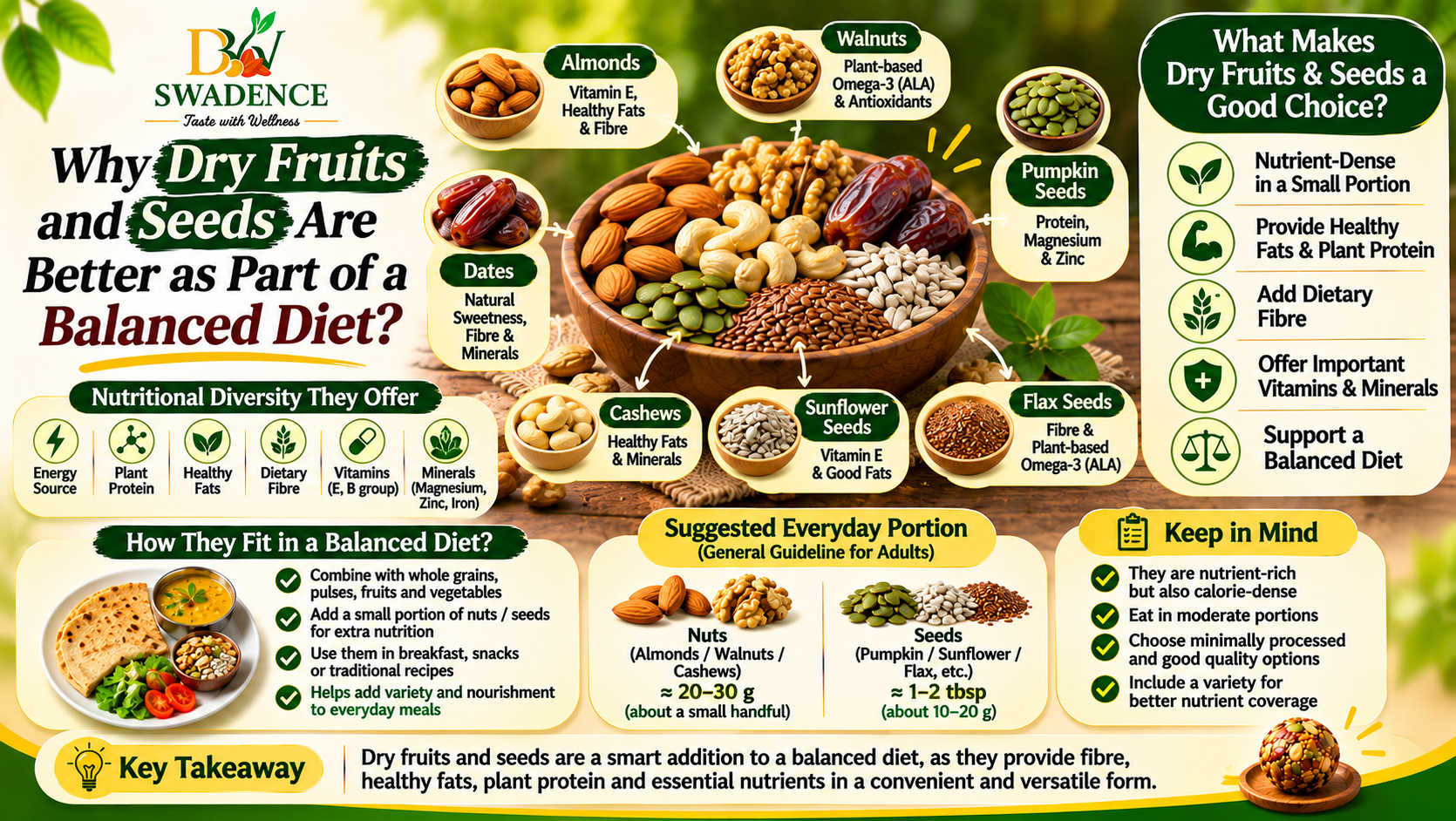
For example, almonds provide vitamin E, walnuts contain plant-based omega-3 fatty acids, and pumpkin seeds provide magnesium.
Combining different varieties can introduce a broader range of nutrients into your diet.
However, dry fruits and seeds are also relatively energy-dense, which means portion size matters.
2. Almonds: A Source of Protein, Fibre and Vitamin E
Almonds are among the most popular nuts in Indian households.
They are commonly consumed as a snack, added to breakfast preparations or included in traditional sweets.
Almonds provide several nutrients, including:
Protein: Contributes to the body's protein requirements.
Vitamin E: Acts as an antioxidant and helps protect cells from oxidative damage.
Dietary Fibre: Supports normal digestive function.
Unsaturated Fats: Contribute to the overall nutritional value of almonds.
Magnesium: Supports several normal functions in the body.
Almonds can be enjoyed whole, chopped or incorporated into homemade food preparations.
Their nutritional value makes them a useful addition to a varied eating pattern.
3. Walnuts: Understanding Plant-Based Omega-3
Walnuts are particularly known for their content of alpha-linolenic acid (ALA).
ALA is an essential plant-based omega-3 fatty acid that the body cannot produce on its own.
Walnuts also provide:
- Dietary fibre.
- Protein.
- Unsaturated fats.
- Copper.
- Manganese.
- Other naturally occurring plant compounds.
They have a distinctive flavour and can be added to breakfast bowls, salads, homemade snacks and traditional food preparations.
Walnuts are one example of how different nuts offer different nutritional benefits.
4. Pumpkin Seeds: Small Seeds with Valuable Nutrients
Pumpkin seeds are becoming increasingly popular in everyday nutrition.
They provide a combination of protein, unsaturated fats and important minerals.
Some of their nutritional components include:
Magnesium: Involved in normal muscle and nerve function.
Zinc: Supports normal immune function and several other biological processes.
Protein: Contributes to daily protein intake.
Unsaturated Fats: Provide energy and contribute to the nutritional profile.
Pumpkin seeds can be eaten roasted or added to salads, breakfast bowls and homemade snacks.
Their mild nutty flavour makes them a versatile ingredient.
5. Sunflower Seeds: A Source of Vitamin E
Sunflower seeds are another useful addition to a varied diet.
They contain vitamin E, unsaturated fats, protein and other nutrients.
Vitamin E is a fat-soluble antioxidant that helps protect cells from oxidative damage.
Sunflower seeds can be included in:
- Breakfast bowls.
- Homemade snack mixes.
- Salads.
- Roasted food preparations.
- Traditional recipes.
Like other seeds, they are energy-dense, so consuming appropriate portions is important.
6. Flax Seeds: Fibre and Plant-Based Omega-3
Flax seeds, also known as linseeds, have gained attention because of their nutritional composition.
They provide two particularly interesting components: dietary fibre and alpha-linolenic acid (ALA).
Their nutritional characteristics include:
Dietary Fibre: Supports normal digestive function.
Plant-Based Omega-3: Provides ALA, an essential fatty acid.
Lignans: Naturally occurring plant compounds.
Protein: Contributes to daily protein intake.
Ground flax seeds are often easier to incorporate into food preparations than whole flax seeds.
They can be added to oats, smoothies, breakfast bowls and homemade recipes.
7. Why Combining Different Nuts and Seeds Makes Sense
One common question is whether almonds, walnuts, pumpkin seeds or flax seeds are the healthiest choices.
The answer depends on what nutrients you are looking for.
Each ingredient has a different nutritional composition.
For example:
- Almonds provide vitamin E and magnesium.
- Walnuts provide plant-based omega-3 ALA.
- Pumpkin seeds provide magnesium and zinc.
- Sunflower seeds provide vitamin E.
- Flax seeds provide fibre and ALA.
Instead of relying entirely on one ingredient, including different varieties can help improve dietary diversity.
This is the nutritional advantage of combining different nuts and seeds.
8. Understanding Healthy Fats in Dry Fruits and Seeds
The word fat often receives negative attention in discussions about food.
However, not all dietary fats are the same.
Many nuts and seeds contain predominantly unsaturated fats.
These fats are an important part of a balanced diet.
They provide energy and help the body absorb fat-soluble vitamins such as vitamins A, D, E and K.
Some nuts and seeds also provide essential fatty acids that the body needs through food.
However, fats are energy-dense, providing approximately 9 calories per gram.
This is one reason portion awareness matters even when choosing nutritious ingredients.
9. Dietary Fibre: Another Reason to Include Nuts and Seeds
Dietary fibre is an important component of everyday nutrition.
Many nuts and seeds contain fibre, which contributes to normal digestive function.
Fibre also helps support bowel regularity and can contribute to feelings of fullness.
Different ingredients provide different amounts of fibre.
Flax seeds, almonds, chia seeds and pumpkin seeds are examples of foods that can contribute to daily fibre intake.
However, nuts and seeds should be combined with other fibre-rich foods such as:
- Whole grains.
- Fruits.
- Vegetables.
- Lentils.
- Beans.
- Pulses.
A varied diet is a better approach than relying on a single snack.
10. Why Portion Size Matters
One of the most misunderstood ideas in healthy eating is that nutritious foods can be consumed without limits.
Nuts and seeds contain valuable nutrients, but they are also relatively high in calories.
Eating large quantities regularly can increase overall energy intake.
A practical approach is to enjoy them in measured portions rather than eating directly from a large container.
For many adults, a small handful of mixed nuts and seeds can be a convenient snack, although appropriate quantities depend on individual nutritional requirements.
People managing their calorie intake may find portioning particularly helpful.
11. Raw, Roasted or Soaked: Which Is Better?
Nuts and seeds can be consumed in different forms.
Each preparation method has its own characteristics.
Raw Nuts
Raw nuts retain their natural flavour and nutritional composition without additional roasting ingredients.
Roasted Nuts
Roasting can improve aroma, flavour and texture.
However, excessive heat may affect certain heat-sensitive nutrients.
Soaked Almonds
Soaking almonds is a traditional practice in many Indian households.
It can soften their texture and make the outer skin easier to remove.
However, soaking does not automatically make almonds more nutritious than unsoaked almonds.
Ground Seeds
Grinding certain seeds, particularly flax seeds, can make their nutrients more accessible during digestion.
The best preparation method often depends on personal preference, recipe requirements and storage conditions.
12. Easy Ways to Include Dry Fruits and Seeds in Everyday Meals
Adding nuts and seeds to everyday food does not require complicated recipes.
Here are some simple ideas:
Breakfast: Add chopped almonds, walnuts or flax seeds to oats.
Morning Snack: Enjoy a measured portion of mixed nuts.
Lunch: Add pumpkin or sunflower seeds to salads.
Evening Snack: Combine roasted nuts and seeds with other suitable ingredients.
Homemade Recipes: Use selected nuts and seeds in traditional laddus and homemade snack preparations.
Smoothies: Add suitable quantities of ground flax or chia seeds.
Small additions across different meals can help improve nutritional variety.
13. Who Should Be Careful While Consuming Nuts and Seeds?
Although nuts and seeds can be part of a balanced diet, they are not suitable for everyone.
Some important considerations include:
Food Allergies: People with nut or seed allergies should avoid the relevant ingredients.
Calorie Management: Individuals monitoring energy intake should pay attention to portion sizes.
Digestive Sensitivity: Some people may experience digestive discomfort when consuming large quantities.
Children: Whole nuts may present a choking risk for young children. Age-appropriate preparation is important.
Medical Conditions: People following specific dietary restrictions should seek individual professional advice.
Food choices should always consider personal needs and circumstances.
14. Why Variety Matters More Than the Superfood Label
The term superfood is commonly used in food marketing, but it does not mean that one ingredient can fulfil all nutritional requirements.
Almonds, walnuts, pumpkin seeds, sunflower seeds and flax seeds each provide different nutrients.
The real nutritional advantage comes from understanding what each ingredient contributes.
A balanced eating pattern should also include:
- Fruits.
- Vegetables.
- Whole grains.
- Pulses.
- Dairy or suitable alternatives.
- Appropriate sources of protein.
- Different nuts and seeds.
No single ingredient can replace the nutritional variety of a complete diet.
15. How Swadence Brings Dry Fruits and Seeds into Traditional Food
At DB6V Swadence, our philosophy is inspired by traditional Indian food preparations and the nutritional diversity of familiar ingredients.
We believe nuts, seeds and other thoughtfully selected ingredients can be brought together in convenient food formats.
Our approach focuses on five important ideas.
Ingredient Diversity: Understanding the nutritional contribution of different ingredients.
Traditional Inspiration: Taking inspiration from familiar Indian homemade food.
Thoughtful Preparation: Paying attention to preparation methods, flavour and texture.
Portion Awareness: Offering individual servings through a convenient 30-sachet format.
Transparency: Helping customers understand ingredients and nutritional information.
Our products are designed around convenience and thoughtful food choices, not exaggerated health promises.
The nutritional value of each product depends on its actual formulation and serving size.
16. A Simple Approach to Better Everyday Eating
Healthy eating does not have to involve complicated diets or expensive ingredients.
Sometimes, small changes in everyday food choices are more practical.
You can start by:
1. Including different fruits and vegetables.
2. Choosing whole grains more frequently.
3. Adding pulses to regular meals.
4. Enjoying appropriate portions of nuts and seeds.
5. Drinking adequate water.
6. Paying attention to nutritional labels.
7. Maintaining consistency rather than following temporary food trends.
A balanced diet is built through a combination of different foods and sustainable habits.
Frequently Asked Questions
Q1. Why are dry fruits and seeds important in a balanced diet?
They provide different nutrients, including protein, dietary fibre, unsaturated fats, vitamins and minerals.
Q2. Which nuts are commonly included in a healthy diet?
Almonds, walnuts, pistachios and cashews are popular options. Each has a different nutritional composition.
Q3. Which seeds are useful for everyday nutrition?
Flax seeds, pumpkin seeds, sunflower seeds and chia seeds provide different nutrients and can be included in suitable portions.
Q4. Are walnuts a source of omega-3?
Yes. Walnuts contain alpha-linolenic acid (ALA), an essential plant-based omega-3 fatty acid.
Q5. Do almonds contain protein?
Yes. Almonds provide plant-based protein along with fibre, vitamin E and unsaturated fats.
Q6. Are pumpkin seeds rich in magnesium?
Pumpkin seeds are a useful dietary source of magnesium and also provide protein and unsaturated fats.
Q7. Are flax seeds good sources of fibre?
Yes. Flax seeds contain dietary fibre and plant-based omega-3 ALA.
Q8. Can dry fruits and seeds help with fullness?
Yes. Their combination of fibre, protein and fats can contribute to feelings of fullness.
Q9. Can I eat unlimited amounts of nuts and seeds?
No. They are energy-dense foods, so appropriate portion sizes are important.
Q10. Are dry fruits and seeds enough for a balanced diet?
No. They are only one part of a balanced eating pattern that should also include fruits, vegetables, grains, pulses and other nutritious foods.
Final Thoughts
Dry fruits and seeds are valuable ingredients that have been part of traditional Indian food culture for generations.
From vitamin E in almonds and sunflower seeds to plant-based omega-3 in walnuts and flax seeds, each ingredient brings something different to the table.
The key is not to search for one perfect superfood.
It is to understand nutritional variety, choose appropriate portions and include different nutritious foods in everyday meals.
At DB6V Swadence, we believe traditional food inspiration and thoughtful ingredient selection can make everyday eating more convenient and enjoyable.
Because a balanced lifestyle is built through small, consistent choices.
DB6V Swadence – Taste With Wellness.