
← All articles
Why Fibre Is Important in an Everyday Diet: Benefits, Sources and Food Choices
Why Fibre Is Important in an Everyday Diet: Benefits, Sources and Food Choices
When people think about healthy eating, they often focus on protein, vitamins, minerals and calories. But there is another important part of nutrition that deserves equal attention: dietary fibre.
Fibre is naturally found in many plant-based foods, including whole grains, fruits, vegetables, pulses, nuts and seeds.
Despite its importance, many people do not pay enough attention to how much fibre they include in their everyday meals.
From supporting normal digestive function to helping meals feel more satisfying, fibre plays several useful roles in a balanced diet.
So, what exactly is dietary fibre? Why does the body need it? And which everyday foods can help you include more of it?
Let's understand.
1. What Is Dietary Fibre?
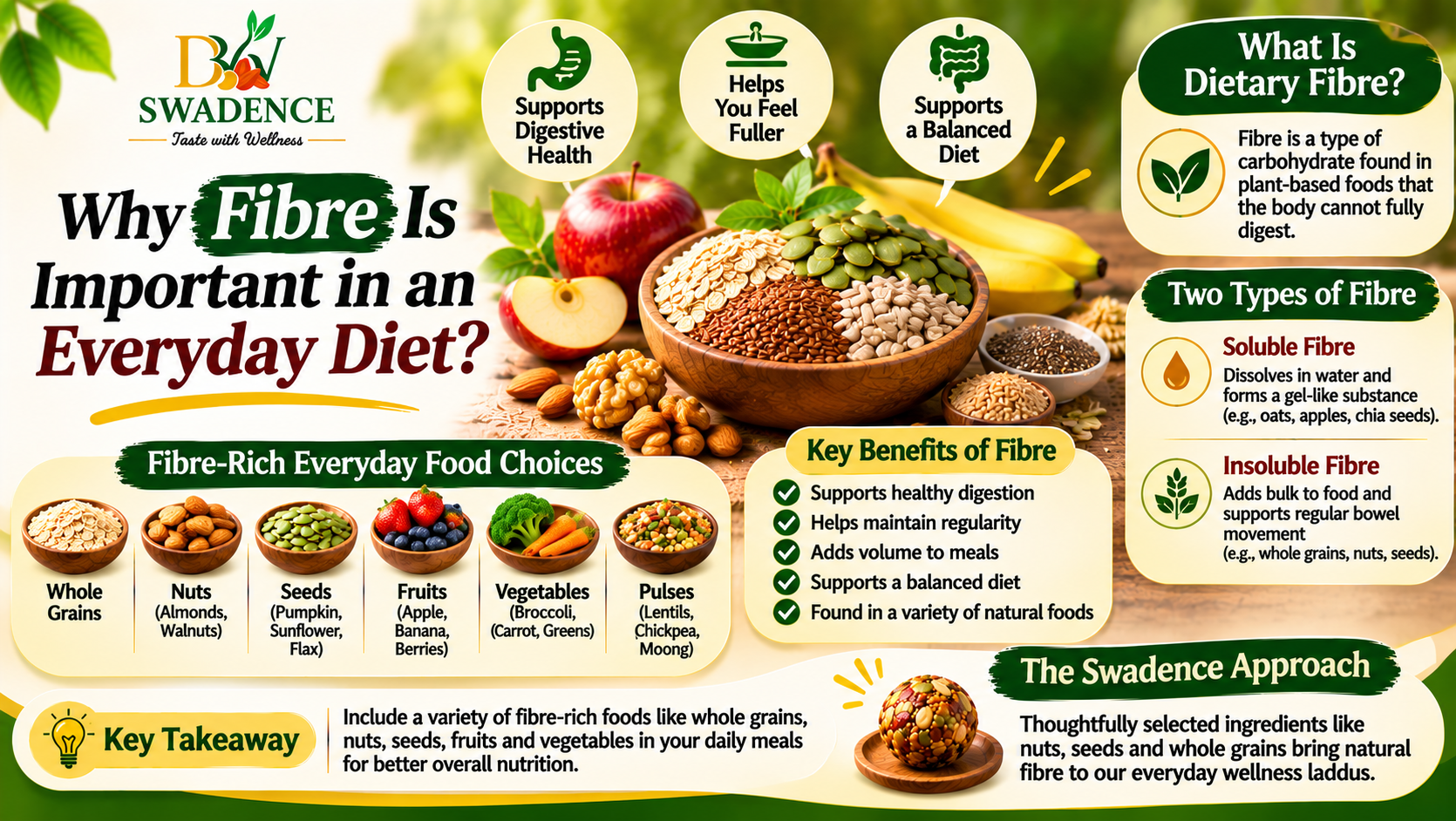
Dietary fibre is a type of carbohydrate found in plant-based foods that the human digestive system cannot fully break down.
Unlike many other carbohydrates, fibre passes through the digestive system largely undigested.
It is naturally present in foods such as:
- Whole wheat.
- Oats.
- Lentils and chickpeas.
- Almonds and walnuts.
- Flax seeds.
- Pumpkin seeds.
- Fruits and vegetables.
Fibre contributes to normal digestive function and is an important part of a balanced eating pattern.
One of the simplest ways to increase fibre intake is to include a variety of plant-based foods in everyday meals.
2. Understanding the Two Main Types of Fibre
Dietary fibre is commonly divided into two main categories: soluble fibre and insoluble fibre.
Both have different characteristics and contribute to digestive health.
Soluble Fibre
Soluble fibre dissolves in water and forms a gel-like substance.
It is found in foods such as:
- Oats.
- Apples.
- Citrus fruits.
- Beans.
- Lentils.
- Chia seeds.
Certain types of soluble fibre can help support healthy blood cholesterol levels and moderate the rise in blood glucose after meals.
Insoluble Fibre
Insoluble fibre does not dissolve in water.
It adds bulk to stool and helps support regular bowel movements.
Common sources include:
- Whole wheat.
- Wheat bran.
- Nuts.
- Vegetable skins.
- Seeds.
- Several green vegetables.
Both types of fibre are useful, which is why eating a variety of plant-based foods is important.
3. How Fibre Supports Digestive Health
One of the best-known roles of dietary fibre is its contribution to digestive health.
Insoluble fibre adds bulk to stool, helping support regular bowel movements.
Certain soluble fibres can also be fermented by beneficial bacteria in the large intestine.
This process produces substances called short-chain fatty acids, which play a role in maintaining intestinal health.
Including fibre-rich foods in everyday meals can help support normal digestive function.
However, increasing fibre suddenly may cause bloating or gas in some individuals.
It is generally better to increase fibre gradually and drink enough water throughout the day.
4. Why Fibre Helps You Feel Fuller
Have you noticed that some meals keep you satisfied longer than others?
Fibre can contribute to this feeling of fullness.
Many fibre-rich foods contain a combination of fibre, water and other nutrients that influence how satisfying a meal feels.
For example:
- Oats can make breakfast more filling.
- Lentils provide fibre and plant-based protein.
- Fruits contribute fibre and water.
- Nuts and seeds provide fibre along with healthy fats.
- Vegetables add volume to meals.
This is one reason fibre-rich foods are useful when planning balanced meals.
However, fullness also depends on portion size, food composition and individual needs.
5. Whole Grains: An Important Everyday Source of Fibre
Whole grains are among the most useful sources of dietary fibre.
Unlike refined grains, whole grains retain their bran, germ and endosperm.
Examples include:
Whole Wheat: Commonly used in Indian chapatis and other preparations.
Oats: A source of soluble fibre, particularly beta-glucan.
Brown Rice: Contains more fibre than ordinary polished white rice.
Barley: Contains beta-glucan and other nutrients.
Millets: Different varieties provide fibre along with other nutrients.
Including a variety of whole grains can help improve the nutritional quality of everyday meals.
6. Pulses and Lentils: Fibre-Rich Indian Food Staples
Indian diets already include several traditional foods that provide dietary fibre.
Lentils, chickpeas, kidney beans and other pulses are excellent examples.
Some common choices include:
- Moong dal.
- Masoor dal.
- Chana.
- Rajma.
- Kabuli chana.
- Black gram.
- Cowpeas.
Pulses provide dietary fibre along with plant-based protein and other nutrients.
They can be included in everyday meals through dal, curries, salads, sprouts and homemade snacks.
Their affordability and versatility make them valuable ingredients in Indian food culture.
7. Nuts: Small Foods with Nutritional Value
Nuts are popular ingredients in traditional Indian diets.
Almonds and walnuts provide a combination of fibre, protein, unsaturated fats and micronutrients.
Some commonly consumed nuts include:
Almonds: Provide dietary fibre, protein, vitamin E and unsaturated fats.
Walnuts: Contain fibre, unsaturated fats and plant-based omega-3 fatty acid ALA.
Pistachios: Provide fibre, protein and several micronutrients.
Cashews: Contain fibre, unsaturated fats and minerals.
Nuts can be included in breakfast bowls, snacks, homemade laddus and other food preparations.
However, nuts are energy-dense, so portion size remains important.
8. Seeds: Small Ingredients That Add Fibre
Seeds may be small, but they can contribute useful amounts of dietary fibre.
Different seeds also provide different nutrients.
Flax Seeds
Flax seeds contain dietary fibre and alpha-linolenic acid (ALA), a plant-based omega-3 fatty acid.
Pumpkin Seeds
Pumpkin seeds provide protein, unsaturated fats and minerals such as magnesium.
Sunflower Seeds
Sunflower seeds contain vitamin E, protein and unsaturated fats.
Chia Seeds
Chia seeds are particularly known for their fibre content and ability to absorb water.
Adding small amounts of different seeds to meals can improve ingredient variety.
They can be included in smoothies, breakfast bowls, salads and homemade snacks.
9. Fruits and Vegetables: Everyday Sources of Fibre
Fruits and vegetables are important parts of a balanced diet.
They provide dietary fibre along with vitamins, minerals, water and various plant compounds.
Some fibre-containing fruits include:
- Apples.
- Pears.
- Bananas.
- Guavas.
- Oranges.
- Berries.
Vegetables also provide different amounts of fibre.
Examples include:
- Broccoli.
- Carrots.
- Green peas.
- Spinach.
- Beans.
- Cauliflower.
Eating whole fruits rather than regularly replacing them with strained juices is a practical way to retain more dietary fibre.
Including different coloured fruits and vegetables can also improve overall dietary variety.
10. How Much Fibre Do You Need Every Day?
Fibre requirements can vary depending on age, energy needs and individual health circumstances.
For many adults, a practical general target is approximately 25–30 grams of dietary fibre per day, although individual recommendations may differ.
Rather than trying to obtain all your fibre from one food, distribute fibre-rich choices across different meals.
For example:
Breakfast: Oats, fruit and a small portion of nuts.
Lunch: Whole wheat chapati, dal and vegetables.
Evening Snack: Fruit, roasted chana or a suitable seed-based snack.
Dinner: Whole grains, pulses and cooked vegetables.
This approach makes it easier to include different sources of fibre throughout the day.
11. What Happens When Your Diet Is Low in Fibre?
A diet consistently low in fibre may contribute to digestive difficulties.
Some common concerns include:
- Constipation.
- Irregular bowel movements.
- Less variety in the gut microbiome.
- Difficulty maintaining a satisfying eating pattern.
Long-term low-fibre dietary patterns are also associated with certain health risks.
However, digestive symptoms can have many different causes.
Persistent constipation, abdominal pain or other digestive problems should be discussed with a qualified healthcare professional.
12. Can You Eat Too Much Fibre?
Although fibre is important, suddenly consuming very large amounts may cause discomfort.
Some people experience:
- Bloating.
- Gas.
- Abdominal discomfort.
- Changes in bowel movements.
This is particularly common when fibre intake increases too quickly.
A few practical suggestions can help:
1. Increase fibre intake gradually.
2. Drink adequate water.
3. Include different fibre sources.
4. Chew food properly.
5. Avoid depending on a single high-fibre ingredient.
People with certain digestive conditions may need individual dietary advice regarding fibre intake.
13. Why Ingredient Diversity Matters More Than One Superfood
Modern food marketing often highlights individual ingredients as superfoods.
Almonds, walnuts, chia seeds, flax seeds and other ingredients all have nutritional value.
But no single food provides everything the body needs.
A balanced eating pattern depends on variety.
Combining whole grains, pulses, fruits, vegetables, nuts and seeds can provide different types of fibre and a broader range of nutrients.
Instead of asking which single ingredient is the healthiest, a more useful question is:
How can different nutritious foods become part of my everyday meals?
That is a more practical approach to long-term food habits.
14. How Swadence Brings Ingredient Diversity into Traditional Foods
At DB6V Swadence, our food philosophy takes inspiration from traditional Indian preparations and familiar ingredients.
Nuts, seeds, grains and other selected ingredients can contribute different nutritional characteristics to a food formulation.
Our approach focuses on:
Thoughtful Ingredient Selection: Understanding the role of different ingredients.
Traditional Inspiration: Taking inspiration from familiar Indian food preparations.
Convenience: Creating food formats that fit into modern routines.
Portion Awareness: Offering individual servings through convenient packaging.
Transparency: Helping customers understand product ingredients and nutritional information.
While nuts, seeds and grains can contribute dietary fibre, the actual fibre content of a product depends on its formulation and serving size.
A single laddu cannot replace the variety of fibre-rich foods needed in a balanced diet.
Our aim is to make traditional food more convenient while encouraging conscious everyday food choices.
15. Simple Ways to Include More Fibre in Your Daily Routine
You do not need complicated recipes to improve your fibre intake.
Small changes can make a difference.
Here are some practical ideas:
- Choose whole wheat chapatis more often.
- Include dal or pulses in regular meals.
- Add seasonal fruits to breakfast.
- Include vegetables at lunch and dinner.
- Use oats as a breakfast option.
- Add suitable quantities of nuts and seeds.
- Try different varieties of beans and lentils.
- Choose whole fruits instead of strained fruit juices.
- Drink enough water throughout the day.
Consistency matters more than relying on occasional high-fibre meals.
Frequently Asked Questions
Q1. What is dietary fibre?
Dietary fibre is a type of carbohydrate found in plant-based foods that the human digestive system cannot fully digest.
Q2. Why is fibre important for digestive health?
Fibre helps support normal bowel movements, adds bulk to stool and can support beneficial gut bacteria.
Q3. What are the two main types of dietary fibre?
The two main types are soluble fibre and insoluble fibre. Both have different properties and roles in digestion.
Q4. Which Indian foods are rich in fibre?
Whole wheat, oats, lentils, chickpeas, beans, fruits, vegetables, nuts and seeds are useful sources of dietary fibre.
Q5. Do almonds contain fibre?
Yes. Almonds provide dietary fibre along with protein, vitamin E and unsaturated fats.
Q6. Are flax seeds a good source of fibre?
Yes. Flax seeds contain dietary fibre and plant-based omega-3 fatty acid ALA.
Q7. How much fibre should adults consume daily?
Approximately 25–30 grams per day is a practical general target for many adults, although individual requirements can vary.
Q8. Does drinking water matter when increasing fibre intake?
Yes. Adequate fluid intake is important for normal digestive function, particularly when increasing dietary fibre.
Q9. Can fibre help you feel full?
Yes. Fibre-rich foods can contribute to fullness and make meals more satisfying.
Q10. Can one wellness laddu provide all the fibre needed daily?
No. A single snack cannot provide all the fibre and nutrients required throughout the day. Fibre should come from a variety of foods.
Final Thoughts
Dietary fibre may not always receive the attention it deserves, but it plays an important role in everyday nutrition.
From whole grains and pulses to fruits, vegetables, nuts and seeds, there are many simple ways to include more fibre in regular meals.
The key is not to depend on one superfood or one wellness product.
It is to build a balanced eating pattern with variety, appropriate portions and consistent food choices.
At DB6V Swadence, we believe thoughtful ingredients and traditional food inspiration can make everyday eating more convenient and enjoyable.
Because good food habits are built one day at a time.
DB6V Swadence – Taste With Wellness.