← सभी लेख
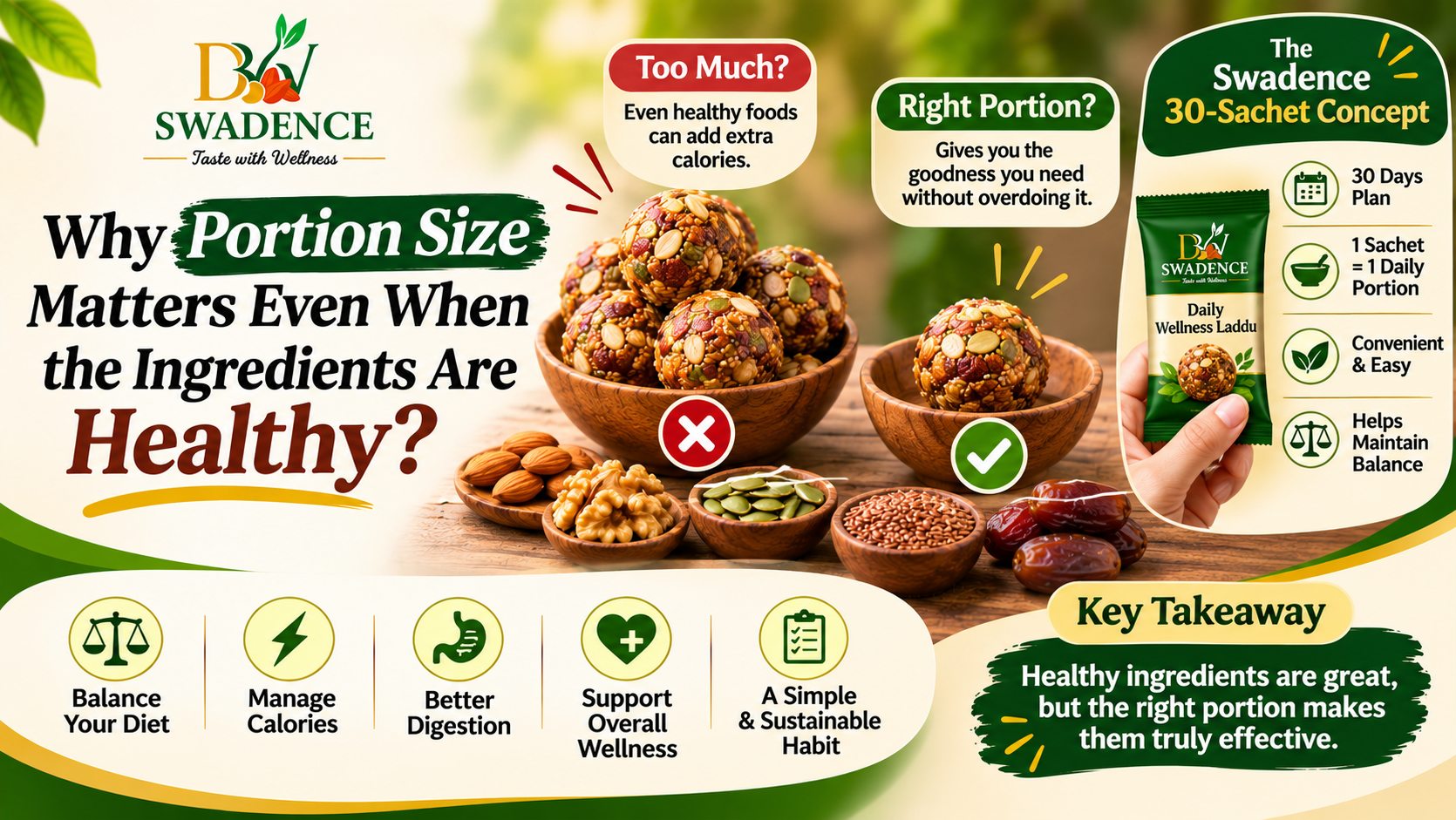
Why Portion Size Matters Even When the Ingredients Are Healthy
Why Portion Size Matters Even When the Ingredients Are Healthy
Have you ever thought that eating more healthy food must always be better for your body?
It is a common assumption. Almonds are nutritious, walnuts contain beneficial fats, seeds provide essential nutrients and dry fruits are naturally rich in energy.
But there is something equally important that often gets overlooked: portion size.
Even nutritious foods need to be consumed in appropriate quantities. Understanding how much you eat is just as important as understanding what you eat.
Let's explore why portion awareness plays such an important role in everyday nutrition.
1. Healthy Ingredients Can Still Be High in Calories
Many foods that are considered nutritious are also energy-dense.
For example:
Almonds: Provide protein, fibre, vitamin E and healthy fats.
Walnuts: Contain polyunsaturated fats, including plant-based omega-3 fatty acids.
Pumpkin Seeds: Provide protein, magnesium and unsaturated fats.
Dates: Contain naturally occurring sugars, fibre and several micronutrients.
Ghee: Adds flavour and richness to traditional recipes while contributing concentrated dietary fat.
These ingredients can be valuable parts of a balanced diet. However, they also contribute calories.
Eating large quantities without considering your overall energy requirements can make it difficult to maintain dietary balance.
The lesson is simple: nutritious ingredients still require mindful portions.
2. Understanding Portion Size vs Serving Size
People often use the terms portion size and serving size interchangeably, but they have slightly different meanings.
Portion Size: The amount of food you actually choose to eat at one time.
Serving Size: A standardised quantity used on nutrition labels or recommended as a reference amount.
For example, a packaged snack may list nutritional information for a 25-gram serving.
If you consume 50 grams, you are eating twice that reference quantity.
Understanding this difference can help you interpret food labels more accurately.
3. Why Nuts and Seeds Need Portion Awareness
Nuts and seeds are excellent examples of foods where portion awareness matters.
They contain a combination of fats, protein, fibre and other nutrients.
Because fats provide approximately 9 calories per gram, foods containing considerable amounts of fat can be energy-dense even when they are nutritious.
Consider some common ingredients:
Almonds: Rich in monounsaturated fats and vitamin E.
Walnuts: Known for their plant-based omega-3 content.
Flax Seeds: Provide dietary fibre and alpha-linolenic acid.
Sunflower Seeds: Provide vitamin E and unsaturated fats.
Pumpkin Seeds: Contain protein, magnesium and zinc.
Including different varieties can add nutritional diversity to your meals, but eating excessive quantities is not necessary to enjoy their nutritional contribution.
4. How Unplanned Snacking Can Affect Your Daily Intake
One reason portion management becomes difficult is unplanned snacking.
Imagine keeping a large container of dry fruits and nuts beside your workstation.
You take a few almonds while working, some walnuts during a break and a handful of seeds later in the evening.
Individually, these choices may appear small. However, repeated snacking can add up over the course of a day.
This does not mean that snacking is unhealthy.
The challenge is that people sometimes lose track of how much they consume.
Having a clearly defined serving can make everyday food choices easier to manage.
5. The Importance of Defined Daily Portions
A defined daily portion provides a simple reference for how much food you intend to consume.
It can help with:
- Understanding daily food intake.
- Avoiding repeated unplanned servings.
- Building consistent eating routines.
- Managing snack quantities.
- Making food consumption more predictable.
However, one portion is not automatically appropriate for everyone.
Nutritional requirements vary according to age, activity level, health conditions and individual energy needs.
A portion that works for one person may not be suitable for another.
6. How Pre-Portioned Packaging Makes Eating More Convenient
Measuring ingredients every day can become inconvenient, especially for people with busy schedules.
Pre-portioned packaging offers a practical alternative.
Instead of measuring the same quantity repeatedly, an individual sachet provides a ready-to-use serving.
Some advantages include:
Convenience: No need to measure the ingredients every day.
Consistency: Each sachet contains a predefined product quantity.
Easy Storage: Individual packaging makes daily portions easier to organise.
Routine Building: A fixed package format can help establish a simple consumption habit.
Portion Awareness: It becomes easier to track how many servings have been consumed.
The nutritional suitability of the serving still depends on its actual composition and the individual's requirements.
7. Why Consistency Matters More Than Perfection
Healthy eating is not about following a perfect diet every single day.
It is about building practical habits that can be maintained over time.
Some simple habits include:
- Planning snacks in advance.
- Including different food groups in meals.
- Being mindful of serving quantities.
- Reading nutritional information.
- Avoiding unnecessary snacking.
- Drinking adequate water.
- Maintaining variety in everyday meals.
Small, manageable changes are often easier to maintain than complicated food routines.
8. Understanding the Swadence 30-Sachet Concept
At DB6V Swadence, the idea behind our 30-sachet concept is built around convenience and portion awareness.
The concept is simple:
30 Sachets = 30 Days
Each sachet represents one predefined daily product portion.
Instead of opening a large package and measuring the quantity every day, customers receive individual servings designed around a convenient daily routine.
This format offers several practical advantages:
- Individual daily packaging.
- Convenient storage and handling.
- Easier serving management.
- A simple 30-day format.
- Less need for daily measuring.
One important distinction: a predefined sachet is a packaging and convenience format, not a guarantee that the serving meets everyone's nutritional requirements.
Customers should always check the product's nutritional information and ingredient list.
9. What Should You Check Before Choosing a Pre-Portioned Food?
Convenient packaging is useful, but it should not be the only reason for choosing a product.
Before purchasing a packaged wellness food, consider:
Ingredient List: Understand what ingredients are included.
Serving Weight: Check how much product is present in each sachet.
Nutritional Information: Review calories, carbohydrates, protein, fat and sugar.
Allergen Information: Check for nuts, seeds and other potential allergens.
Storage Instructions: Follow the recommended storage conditions.
Shelf Life: Check the manufacturing and expiry or best-before information.
These details help you understand whether the product fits your individual dietary preferences and requirements.
10. Making Portion Awareness a Daily Habit
You do not need complicated calculations to become more mindful of your food intake.
Start with a few practical steps:
1. Avoid eating directly from large snack containers.
2. Decide your snack quantity before eating.
3. Read serving information on packaged products.
4. Include variety rather than depending on one ingredient.
5. Pay attention to your overall daily food intake.
6. Choose portions according to your individual nutritional needs.
Over time, these small practices can make food choices more organised and intentional.
Frequently Asked Questions
Q1. Why is portion control important even when eating healthy food?
Nutritious foods such as nuts, seeds and dry fruits can also be energy-dense. Portion awareness helps manage overall calorie and nutrient intake.
Q2. Can eating too many almonds or walnuts contribute to excess calorie intake?
Yes. Almonds and walnuts contain considerable amounts of fat and calories. Consuming large quantities can increase total daily energy intake.
Q3. What is the difference between portion size and serving size?
Serving size is a reference quantity, often shown on nutrition labels. Portion size is the actual quantity a person chooses to eat.
Q4. What are pre-portioned food sachets?
Pre-portioned sachets are individual packages containing a predefined quantity of food, designed to make serving and storage more convenient.
Q5. What is the Swadence 30-sachet concept?
It is a convenient packaging format in which a 30-day pack contains 30 individual sachets, with one sachet representing one predefined daily product portion.
Q6. Does one daily sachet provide the complete nutrition a person needs?
No. A sachet is an individual product serving, not a replacement for a balanced diet or a person's complete daily nutritional requirements.
Q7. How can I avoid unplanned snacking?
Planning snack portions, using individual servings and avoiding eating directly from large containers can help improve portion awareness.
Q8. Does portion control mean avoiding favourite foods?
No. Portion awareness is about understanding quantities and maintaining balance rather than unnecessarily avoiding foods you enjoy.
Final Thoughts
Healthy eating is not just about selecting nutritious ingredients. It is also about understanding how much you consume and how different foods fit into your overall diet.
Nuts, seeds, dry fruits and traditional food preparations can all contribute to dietary variety when consumed in appropriate portions.
At DB6V Swadence, we believe convenience and portion awareness can make everyday food routines easier to manage.
That is the thinking behind our 30-sachet concept: one predefined portion, packaged for everyday convenience.
Because building better food habits starts with making thoughtful choices consistently.
DB6V Swadence – Taste With Wellness.